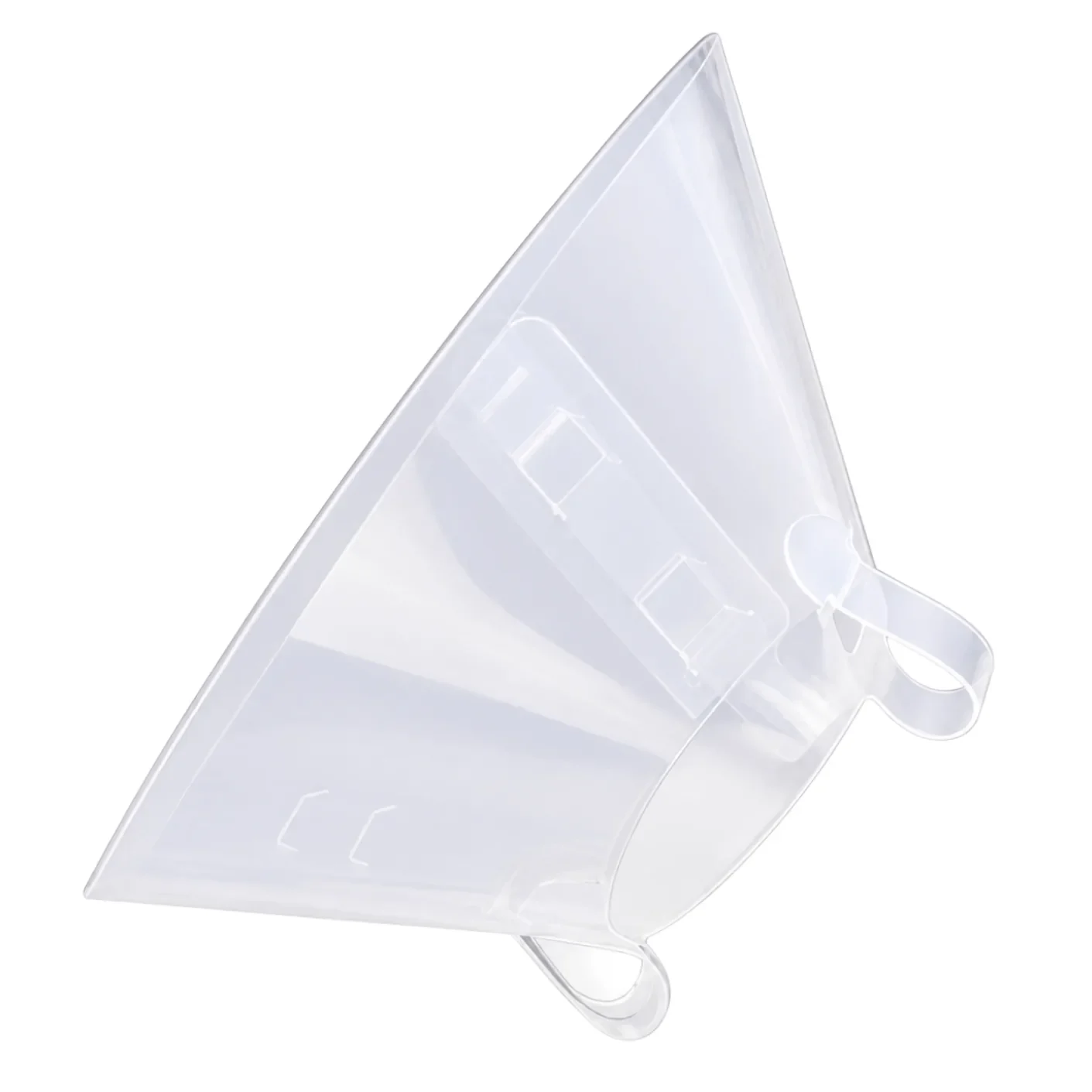
For a private-label PP recovery collar, the sheet and the print need to be reviewed together. A logo that reads clearly on a smooth transparent collar may look different on a frosted surface or an opaque sheet.
Alpha PetPro's material options are clear, diagonal, frosted, and colored polypropylene. These describe the surface and appearance of the collar body. They do not establish a resin grade, a clinical performance result, or a certification.
Compare appearance before approving artwork
Swipe the table horizontally to compare all columns.
| PP choice | Surface or appearance | What to check on the sample |
|---|---|---|
| Clear | Smooth, transparent PP | Visibility through the sheet and contrast of your artwork |
| Diagonal | Textured transparent PP | The texture, reduced surface glare, and fine printed details |
| Frosted | Translucent PP with a softer appearance | How the finish changes the visible print and sheet background |
| Colored | Translucent or opaque colored PP | The approved sheet color, opacity, and print contrast |
The customization page shows these material options alongside the closure, edge, printing, and packaging choices.
Clear PP is the transparent starting point
Clear PP is the standard smooth transparent option. It is flexible and is used for programs that want the collar body to remain see-through.
“Clear” is a descriptive finish, not a measured light-transmission result. If your purchasing requirements include a specific resin grade or a test report, ask for the relevant documentation before including that requirement in the order.
Diagonal PP adds a surface texture
Diagonal PP is still a transparent sheet. Its diagonal texture adds grip and reduces glare on the collar surface; it does not change the closure model or the seven-size range.
Ask to see the texture alongside your intended artwork. Fine lines and small lettering should be reviewed on a sample of the actual surface, rather than approved only in a flat digital file.
Frosted PP remains translucent
Frosted PP reduces shine and softens the appearance of the sheet while remaining translucent. It should not be specified as an opaque material.
If your brand colors depend on the background showing through, compare frosted and clear samples with the same artwork. That makes the difference in surface appearance easier to judge.
Colored PP needs both a color and an opacity choice
A colored sheet can be translucent or opaque. The sheet color is different from a printed ink layer, and printing can be specified in addition to the colored material.
Provide a physical color reference or a Pantone target, and say whether the sheet should remain translucent or be opaque. Approve the color on the sample; a screen image alone is not the approval reference.
Put the material into the complete production brief
The sheet is only one of the five production choices. Include the closure model, printing, edge binding, and packaging in the same brief. Model V requires edge binding; Models A and C can also be specified with it.
If you require market-specific documents, identify the destination and the exact documents you need. Confirm what can be supplied before adding a compliance claim to the purchase order or retail packaging.
Compare the collar models, then send your material requirements.